Tuesday, May 12, 2009

Lynn Hershman (Artist Post #11)


Lynn Hershman

I really find Lynn Hershman’s work interesting because of the ideas she fuses together in her photography and in her use of Photoshop. In The San Jose Museum of Art, San Jose, May 10, 2008 - August 30, 2008, her gallery has a theme of fusing human images with materialistic objects. The way in which the objects are fuse make me think of Lynn Hershman as an artist making a statement about the certain objects used. For instance, in the picture entitled “Seduction” there lays a women on the bed in a seductive pose, but with a TV instead of a head and face. Perhaps what Hershman is trying to convey to her audience is that we a society put too much emphasis on things that should be personal, like love and sexuality, on forms of media such as the television.
While I have seen some of her work in photography, video, installation, interactive, and Net-based works, the part that I found most intriguing were pieces of her photography. Her 53 videos and seven interactive installations have won many international awards. In 1995, she was the first woman to receive a Tribute and Retrospective at the San Francisco International Film Festival, and in 1994, she was awarded (with director Peter Greenaway and theorist Jean Baudrillard) the Siemens Media Prize by the ZKM. In 1998, she was a Sundance Screenwriter Fellow and was honored with the Flintridge Foundation Award for Lifetime Achievement in the Visual Arts. In 1999 she received the Independent Spirit Award, and the prestigious Golden Nica Prix Ars Electronica.
Her project challenges the legality of genetic DNA ownership by creating a virtual entity comprised of the aesthetics, experiences, and interests of users. This "tamagochi-like" creature will be an Internet-bred construction of identity that will flesh out through cumulative virtual use, reflecting the global choices of Internet users. This could perhaps be an extension of her work during a furture exhibit, furthering the idea of technology fused with the human body and experiences.

Sunday, April 19, 2009

Yeas and Nays (Artist post #10)

Christian Croft: Yeas and Nays (Artist post #10)

Digital artist Christian Croft has designed a new, innovative and exciting way to get people more involved in their government. He created a widget that can connect to any cellphone, which connects calls to a website of supports of the democratic process. On the layout of his site called “shiftspace.org” there is a video in which Christian Croft himself goes into detail about how to use the widget, making call to his own senator and displaying the MP3 recorded by the widget that he created himself, on the website so that his answers (or lack thereof) are displayed for all of the yayers and nayers to see. “Yeas and Nays is a space that transforms any webpage into a means for contacting Congressional representatives. Using Yeas and Nays, a citizen can connect via phone to speak with her representatives, and the resulting shift keeps a record of the call located on the website that informed it.”


The site has 10 easy steps for using the widget:
1. Install the space through the settings>Spaces tab by typing ‘YeasAndNays’ in the ‘install a space’ text box.
2. Initiate the space by pressing the [Shift] key, move your mouse over the [+] icon and click on the YeasAndNays icon.
3. The YeasAndNays widget will appear on the screen where you summoned it.
4. Enter your zipcode in the widget to look up your corresponding Congressional representatives.
5. Choose the Congress person you wish to call and enter your phone number.
6. Check the box that says you agree to YeasAndNays generating a call that bridges your phone to your Congress person’s office. Then choose whether or not you want to record your call so that others can listen to it on ShiftSpace.
7. Have your phone ready and click the “Call Now & Connect Me” button. Your phone will receive a call almost instantaneously.
8. An automated YeasAndNays phone menu will greet you and instruct you to press 1 on your phone keypad to connect to your Congress person’s office.
9. Once your call is bridged, talk to the representative about your issue. Try to use information on the webpage and refer to your talking points to support your cause.
10. After your call is finished, the YeasAndNays shift will update and tell you that your call is completed. If you chose to record the call, then you can listen to an mp3 of it now.
11. Your YeasAndNays shift is automatically saved once your call has been completed. At this point, other ShiftSpace users can see your shift and listen to your phone call to your Congress person.

I personally think Christian Croft’s ideas are interesting and decided to write about it because of how it responds to the general lack of interest that the public has in current politics. Crofts widget is a cool way to keep people connected and interested in what is going on in the public sphere, as well as making contacting and making your voice heard in this democracy.

Tuesday, April 7, 2009

Mouchette- Artists I plan on Incorporating-5


Mouchette- Artists I plan on Incorporating-5

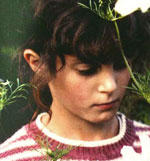
The journey that Mouchette takes us through on the website is that of a thought process, and that is what I plan on making my final project structured around. Mouchette.org is an interactive website created in 1996 by a pseudonymous character, an Amsterdam-based artist who calls herself "Mouchette". With her innocent salutation and claims to be "nearly thirteen"[1] greeting us from the introduction page, what initially appears as a personal website of a pre-pubescent female artist, evolves into darker themes in the subsequent pages. Mouchette is loosely based on 1937 book by Georges Bernanos and the 1967 Robert Bresson movie, Mouchette. The storyline is about a French teenager who commits suicide after she is raped. An online quiz comparing the “Neo-Mouchette”[2] to the movie angered Bresson's widow, so she threatened a law suit against the artist behind the project. The quiz was taken down after that incident.[3] [4][5] The creator of the website has been closely guarded secret[3]. While the use of taboo subject matters are what initially "provokes heated reactions"[3], the manipulation of cyber identity[3] and the ability of the creator to maintain anonymity for so long are the significant reasons this website has garnered its “international reputation”[5] in the Internet Art community.

SHU LEA CHEANG (atleast from the website)- Artists I plan on Incorporating-4

This montage was created based on the true story of Teena Brandon, a 21-year-old woman who in 1993 was raped and later killed for passing as a man, fascinated film-going audiences when Hillary Swank portrayed her in "Boys Don't Cry" (1999). A year earlier, the Guggenheim Museum in New York commissioned Taiwanese-American artist Shu Lea Cheang to make Brandon, a Web-based art work (the first commissioned by the Guggenheim) that explores Teena Brandon's story in an experimental, non-linear way, conveying the fluidity and ambiguity of gender and identity in contemporary societies. I found it on the Shu Lea Cheang website. I plan on incorporating several collages, to some extent like this one, in order to portray different stages of life. I plan on creating links to minor parts of the collages that connect the piece back into a part of the larger scope of the project.


Juha Huuskonen- Artists I plan on Incorporating-3


Juha Huuskonen- Artists I plan on Incorporating-3

I really like the constant interactions apparent within Juha Huuskonen’s work in the piece entitled “doublecell.” The piece is really cool because it consists of basically one frame which repeats itself based on user interactions within the piece. I like the fact that in concept it seems very simple that really isn’t. The interactivity drives the piece, and urges the user to continue on further and further. I got almost obsessed with finishing each interaction within the series. I spent a lot of time connecting the battery cells they just keep repeating. Something that I didn’t notice about the piece at first was the little revolving circle that moves faster as the user responds to the piece.


When I experienced doublecell: “Bob meets Barbra” I was drawn into it. I spent quite an amount of time just working with the tiny aspects of it until I realized just how much time I had actually spent working on it. I think this would be a great way of getting people interested and invested within my final project piece. I want it, overall, to be a piece that is user based and that responds to the users choices. I plan on utilizing game style interaction like Juha Huuskonen does in doublecell: “Bob meets Barbra” within my piece in order to further get the user involved. So that my final project will be one in which the user is constantly involved and not one that they merely look at and experience. Ii think I’ll probably incorporate these minor visualizations through interactions with buttons in my piece.

Monday, April 6, 2009

Final Project- Artists I plan on Incorporating-2

Artists:
M. River & T. Whid
Art Associates


When I first dicovered M. River and T. Whid's work, it made me laugh. I really enjoyed their projects because of how they incorporated realism and drew me into their world. It makes the viewer part of the project, part of the peice. While I don't plan on incorporating camera footage of myself into the video, I do plan on making interaction through things like buttons and settings that M. River and T. Whid use in many of their projects.


MTAA (M. River & T. Whid Art Associates) is a Brooklyn, New York-based conceptual and net art collaboration. MTAA is also a real-time performance played out on the Internet, in physical installations, through print media, documentation, and miscellaneous ephemera. Using aspects of conceptual art, popular culture and real-time performance, MTAA’s work seeks a new manner of dialogue between artist and audience. Find MTAA's online artwork and documentation at MT Enterprises WorldWide. (http://mteww.com/)

Sunday, April 5, 2009

Revise and Resubmit. (Artist Post #9)

KERRY JAMES MARSHALL (Artist Post #9)

I plan on incorporating part of the ideas that I found while researching this author into my final project. I think he is also relevant to our class however, because of the way in which he completes his work. Kerry James Marshall is a contemporary artist, a painter to be exact. He has done a great many variations of work and conceptual ideas. The one in particular that I felt went along with some of the stuff we were doing in class is entitled “Momento.” On the SFMOMA site, I saw a video in which he was discussing the creation of his work and how he came to the final product after much reflection. “Momento” is mainly a piece of artwork that is based significantly around the time period in which it was first created. When Marshall first created it, he made it as vivid and extravagant as possible. After looking back on his work he realized that the piece was not what he wanted. He even states in the video that he was unhappy with how “ostentatious” the piece seemed to him. The original had a variety of colors and even gold glitter. It is a piece depicting the family life in the 1920s of a black family and what they hold dear to them. In the video, Marshall reflects upon his choices to incorporate so many colors into his artwork. He was reflective on the time period he was trying to convey within the piece and then found that he would be happier creating the piece in black and white, using grayscale to still have impacted colors. I think that this holds particular significance to what we recently discovered in class during the critiques of our final projects. Artwork can always be changed, tweaked- and made different- to better convey the fundamental ideas that made us start drawing- or in our case, flashing.

Final Project- Artists I plan on Incorporating-1


KERRY JAMES MARSHALL ON HIS USE OF GAMES AND PUZZLES

http://www.sfmoma.org/multimedia/videos/351

I like how Marshall’s visual artwork plays tricks on viewers because of the illusions he embeds within the work. It’s apparent that the viewer will have to eventually work through the piece mentally and change how they interpret each part of the piece. I think it would be useful to incorporate techniques that Kerry James Marshall does as well as more interactivity. I think the drawing tool, or something close to it will be useful to the project.

Artist Kerry James Marshall discusses the ways the visual vocabulary of children's activity books influenced his murals for SFMOMA's atrium.
0. Total running time: 1 min. 24 sec.
0. Featured Artist: Kerry James Marshall
SFMOMA Release Date: February 2009

Talk About Time Based Media! (Artist Post #8)

William Kentridge (Click this to see a video of him at work!)

A perfect example of the collision between digital, time based media and physical traditional forms of media, William Kentridge shows how the two can be fused together to make something altogether breathtaking. I found this artist on the SFMOMA site under the multi-media tab. I became interested in his work because of its relevance to our class. His pieces are extraordinarily immaculate, meticulous, and time consuming. I can’t even fathom how much dedication it take for Kentridge to create just one of his pieces, let alone the huge collection that he has been able to display on the website. But enough about my speculation on just how amazing Kentridge is, I’ll tell you about his work.
What he does is creates images on a sheet of paper using charcoal. He then uses a camera to snap two frames of each image he creates physically on the paper by hand. Each time he creates a new image he takes two frames, afterwards he goes back to the same drawing and alters it, but only slightly, and takes another two shots with the camera of the new image. Sometimes the alterations are as slight as simply erasing marks from the previous drawing by hand. In one piece in particular entitled “Tide Table”, he is able to capture the fluidity of the ocean beating against the rocks of the shore, and a person crossing against the wind and waves on stepping-stones in the water. In the video provided on the website of him creating his work, one can only assume that the painstaking and arduous process must be somehow therapeutic for him.
I really admire his dedication, and I enjoy seeing how the incorporations of both types of media create something unique. As the pictures move, I am able to see a progression of his drawings over time, and am reminded that he’s drawing each one only through the faintly visible eraser marks.


Tuesday, March 17, 2009

You Move You Interact - Digital Art Installation (Artist Post #7)

Joao Martinho Moura

http://www.vimeo.com/938611

I found this project by João Martinho Moura while doing some research online about various installation projects in order to get some ideas about our next class project. What interested me in this specific installation that Moura created is the way in which he uses the audience and people within the gallery to interact with the piece. The piece itself is a type of living environment, and the audience partakes and interacts with whatever is going on inside of the piece. This is very similar to the piece that we viewed in class by our very own professor, Patrick Kelly. “Cast” also interacts with the viewers in that they see themselves inside of the pieces- which presents a type of echo on what humanities “noise” does to the environment, with an implied harm and warning of what it can cause. Obviously both projects are different, but they definitely utilize a fundamental link with information from the outside world. The interface of Moura’s installation looks very complicated, however. The way in which each person who views the project is immediately shown to be an outlined form within the project, makes me think there must be some sort of camera and mask combinations going on within the coding, not to mention complicated script which allows the shapes to morph continually according to the sizes and shapes of the data taken from each person.
As an Interactive Media Artist born in Portugal, Moura’s focus as a software designer has more and more frequently been in the area of multimedia and information systems. He worked on numerous projects in fields of education, media, entertainment, telecommunications and health industries, in Portugal, Israel, France and the United Kingdom. His interests are focused in intelligent interfaces; digital art and music, all of which are clearly visible in the installation piece entitled “You Move You Interact.” I really enjoyed the ambient music involved with this piece and how the sounds seamlessly flow with whatever actions the players make while viewing and experiencing YMYI in its entirety.
Friday, March 6, 2009

Uh Oh HOT DOG! (Artist Blog # 6)


Pablo Genoves

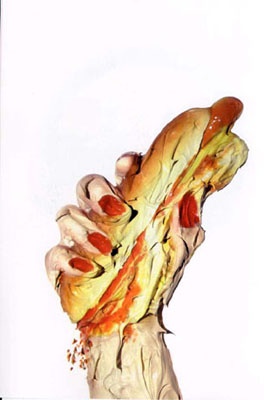
This was an artist that I also discovered on the Alternative Musem site. Although I had seen a few pieces of Genoves work before in some of my previous art classes, I never really knew much about him and his distinct form of medium. What is striking about his work is that it looks (at least to me) to be more sculpture based as opposed to something done completely digitally. Particularly in his piece entitled Hot Dog I felt the depth of what seemed to be to be sculpture because the hotdog and hand itself had a variety of visible textures. I was tricked. It turns out that Genoves uses the computer to come up with these pieces and not clay, plaster or papier-mâché.
Pablo Genoves produces a combination of a great many different artistic disciplines and an intersection of realism and fantasy. The convergence of either familiar appropriation in addition to his own original images with photographs of previously painted canvases and transforms them digitally. These works have the false and somewhat confusing appearance of painting reproductions or sculpture pieces done in a physical studio as opposed to something done on a digital canvas.


Genoves’ work leave me wonder just how he completed his final pieces of art. It makes me wonder how he became interested in the teqnique of changing the way we view elementary sculpture and photography and why it was that he chose to utilize digital media in order for changing the original artwork into something completely different. It seems as though, through his work, he is making a statements about the different mediums in art and how they each add something differently. Obviously for him this must mean that he feels the most freedom in the medium of digitalized artwork as opposed to more conventional ways of producing the painting reproductions that he started out with. He engages the audience in a discussion on the great cycle of art, and how far it has come over the ages. It reminds me a lot of the project mentioned in class in which someone took photographs of photographs and claimed them as their own artwork, merely because of the slight change.

Wednesday, March 4, 2009

FOR NEXT CLASS
Pat says:
Utilize the camera mode, play with the idea of the viewer and how they are incorporated into your project.
Three new animations

FOCUS ON THE CONCEPT OF THE VIEWER!!!

Thursday, February 26, 2009

Alessandro Bavari (Artist Post #5)

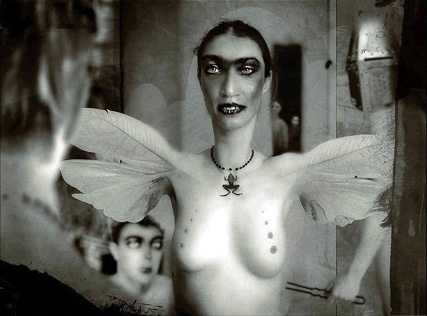
Alessandro Bavari was born in 1963 in Latina, a town bordering the cost on the south of Rome, Italy where he grew up as a member of an Italian-French family. Alessandro Bavari's work is directly correlated with two of the artist I have previously decided to blog about. Although his work is in the same vein as Jacqueline Hayden or even Fran Herbello, there are some stark differences between the two. For one thing, there is nothing subtle about Alessandro Bavari's work. Unlike some of the other artist that I have posted on, he does not attempt to merge seamlessly the pieces of fiction and reality within his work. His pieces are whimsical yet somehow disquieting. The masculine face on the somewhat feminine body in his first piece contrast with one another sharply, leaving me to question what his purpose of doing so was. Also, the distorted bodies of the figures in the background are in stark contrast with their blunt sinister facial expressions. Bavari mismatches everything from focus to our preconceptions of what fantasy is and how reality comes into play within that notion.
Throughout his career Bavari has taken several photographs of people, animals, objects, architecture, landscapes, and fossils. He uses these images as the toolbox for his work, which is greatly influenced by “Indo-European cultural myths and allegories.” His pieces merge several different photographs together. It makes me wonder whether or not Photoshop is the only thing he uses in his creations, and what inspires him to create such odd collages of the separate mosaic photographs that he has taken. His manipulation of many of his own original photographs creates a narrative that he takes as a description of “unconscious urges and desires.”
I’m not quite sure what the urges and desires of the Portrait of nymphomaniacs in Gommorah is exactly attempting to portray, (possibly sex and the desire to fly?), but I found his work to be interesting all the same. I can’t wait until we get started with Photoshop in class! If nothing else, I admire how Bavari’s work is distinctly his unique expression of human desires- he took his own photographs and merged them in photo processing software to create his own inimitable visions.

Thursday, February 19, 2009

What I've got so far!! Please comment.

http://students.smcm.edu/rnali/lovestory.html

Wednesday, February 18, 2009

"Roy Rules. It would be a 24/7 96" (Artist Post #4)

Simen Johan creates a situation in his photography that forces the audience to implicate and use their own experiences as a way of getting into what the piece really means. The first piece that I viewed of Johan’s work was entitled “#96”. I think the anonymity of the piece adds to the artist’s intention of leaving interpretation up to that of the viewer. Usually artist name their artwork, whether it be for symbolic or simply categorization purposes. Johan, however, refuses to do so, and therefore creates only a picture which we must decipher.
Number 96 shows a disorderly un-kept while girl with a bag over her head and an arrow in her left hand. In front of her lies, what seems to me, a bald eagle. She is surrounded by walls that were once white but now remain beaten, scratched and graffitied with monsters and other whimsical characters, along with numbers written backwards. To me, personally, the artwork symbolizes the death of the innocence and purity of a nation, preferably the United States because of the implications that a bald eagle holds as our national bird. The dirtied girl with a bag over her head seems to beg for sympathy and help, as she seems to wither away. The girl can also be seen as responsible for the nation’s death, mostly because of the arrow in her hand, yet she seems blind because of the bag, and helpless because of the daunting walls of horror that surround, entrap and somehow torment her.
Through his photography, Simen Johan questions his viewers and creates “narrative possibilities and allegories that appear vaguely familiar and produce numerous associations” (Johan). Johan further states that it is his hope to “to seduce viewers into letting their experience, imagination, and understanding of existing popular narratives create their own interpretations of my images.” I love the mystifying effect that it creates in and of itself.


"Number 96"

Monday, February 16, 2009

Disturbia (Artist Post # 3)

Jacqueline Hayden

When I saw the disturbing artwork of Jacqueline Hayden I was immediately reminded of the most disturbing scenes that are frequent in horror films. Looking through some of the pictures posted on the Alternative Museum’s website, I began to wonder what it is about the art that is so disturbing. Her art is very realistic and appears to the viewer to be an actual human, at least the photographed work. When I saw her sculpture on the pedestal, it gave her artwork an entire different look and feel. To see people looking up at the piece put things in a new perspective and made the artwork seem somewhat powerful. Staring up at a grotesque human body I think says a lot about a society’s standards and views on culture.
Jacqueline Hayden considers her work creations of digital composites which are photographs of older figure models and photographs made of ancient statuary in situations that usually significantly engage the visual history of aging. The photograph is, according to Ms. Hayden, "by its analog and societal nature a copy, a reproduction of 'something real.' The digital age [however,] is challenging the power of the photograph's veracity. I am attempting, in my Ancient Statuary Series, to question the presumptions of that truth." By creating these implausible images, I feel as though Hayden, through her work, is asking if not forcing her audience to scrutinize what is true and false both in photography and in reality.


I really liked Jacqueline Hayden’s work because it stuck out in my mind, and made me question it, question not only the physical art itself but also what it meant, question not only what it meant but how it was made to signify what it was trying to convey to me. I think it is a wonderful thing when artwork can be so deep and mysterious and quizzical simultaneously.

Thursday, February 5, 2009

In Our Own Likeness (Artist Blog #2)

Yummy.

When I first saw the some of the work of Fran Herbello I was a bit grossed out. Then again, I’m sure if you looked at it all too- you’d feel the same way. It wasn’t until the third or so photograph that I was able to realize that these pictures were photoshopped. Which means, among other things, that Fran Herbello has some MAD PHOTOSHOP SKILLS! I mean, his work is amazing. The seamless way in which the objects that flow together with the texture of the human skin is eye popping.


Fran Herbello states his fascination with playing “with everyday elements creating new situations that break the usual way of seeing the familiar. I care on the skin, I make ephemeral interventions which I document with truthful, scientifically rigorous black and white images.” Herbello has it down to a science. He blends graphic- real images with objects from our everyday lives and then, after having merged them together, makes his art a statement and more believable by divorcing the pictures from all their color. His pieces of work are “sculptures and photographs at the same time, as is the case with a great part of modern day sculpture. Photography doesn’t only replace intervention, but it also increases the credibility of the result that it stimulates due to the role of notarial testimony usually attributed to the photographic medium. Fran takes good advantage of this; make it more acute by his use of black and white and his choice of precise photographic variables. As a result, fragmented bodies are as real as the unusual.” (The Alternative Museum)


I was really fascinated with his work because I enjoy working photoshop in order to merge things and create new forms of art from pieces that already exist as well as the notion of creating something entirely new. I think that, through his artwork, Herbello is successful at achieving both.

Wednesday, January 28, 2009

Futuresex Lovesounds (Artist Post #1)

I found the piece “Love Songs From My Computer” on the Alternative Museum site. The artist of the work, GH Hovagimyan, is known for involvement in text based conceptual art. “Love Songs From My Computer” is a simply put piece of art- in the form of four quick time clips. The four clips are labeled “Love,” “Hello,” “Dream,” “Feel,” “Happy,” “Sell” and “Want.” Each clip features a synthesized voice along with different beats and electronically made sounds. Hovagimyan, although not a professionally trained musician, enjoys creating art involving sounds.

The title of the artwork, “Love Songs from My Computer,” is very telling of the piece and the artist’s intentions when creating it. Each song is completely electronic, and compels the audience to mull over the notion (whether it be absurd or not) of feeling computers. This notion, that computers can feel- or rather simulate- distinct emotions like love or happiness or possess certain desires such as wanting, is as unsettling as it is somewhat comical.


Hovagimyan goes further into expressing both the connections and disconnect between computers and the human experience by stating that his preference in creating this particular project was the synthetic voice because “synth voices can do things human singers can't like sing the same word very rapidly for a long period of time without taking a breath and without making a mistake.” He also used the simple format of distorted quick time players, which not only gives the piece an old juke box feel, but allows spectators to interact with each clip, mixing the sound to create a sound entirely new.

I was drawn to Hovagimyan’s work because I love music! I found the artificial voices used in this piece reminiscent of the voices that were present in Mark Hansen and Ben Rubin's “Listening Post”. I like the idea of combining digital art with sounds, and in my previous years at St. Mary’s, in other art classes, I have worked with programs such as Audacity to mix and integrate music with digital sounds, as well as for the purposes of distortion. I think GH’s project is really inspiring and telling of recent times. So many musical artists today incorporate computer synthesizers into their music (T-Pain anyone?), that sometimes it really does seem that I’m listening to nothing more than a computer.


“We recognize the form of singing but with Love Songs from My Computer the form becomes something else, it's not in the pop song milieu. It's an art work." – GH Hovagimyan


http://www.alternativemuseum.org/exh/gh/gh.html

Wednesday, January 21, 2009

Sample artist post

Here's a sample artist post. I'll insert an image.